


A Consumer-Centric Look at the Influences Shaping Home + Housewares Demand
A Consumer-Centric Look at the Influences Shaping Home + Housewares Demand
The third installment of the 2025 International Housewares Association (IHA) State of the Industry — MarketWatch — provides in-depth directional analysis of primary values and trends influencing consumer attitudes, behavior and home lifestyle preferences… and their influence on home and housewares demand.
MarketWatch presents exclusive research and analysis by Springboard Futures, in collaboration with Project Partners Network, commissioned by the International Housewares Association. MarketWatch completes the three-part inaugural IHA State of the Industry Report, following MarketScope, which details the retail market size and growth of key housewares categories and MarketOutlook, which reveals category-by-category purchase intent for the coming year.
MarketWatch charts and corresponding analysis are presented in five segments:
-
- Meals and Making: Balancing Cost and Consciousness
- Decision Drivers: The Informed (and Influenced) Modern Consumer
- Truth and Transparency: Expectations Expand As Responsibility Continues To Influence Intent
- The Work of Wellbeing: Intersections of Obstacle and Opportunity
- Trouble with Tasks: Frustration Directs Function and Features
HomePage News is the official media partner of the IHA State of the Industry Report.
For MarketWatch, Tom Mirabile, founder of Springboard Futures, curates, combines and analyzes results of two separate consumer studies by Springboard Futures for IHA: The 2024/25 Value Equation Index; which evaluates factors that characterize and weigh value when shopping for and purchasing housewares; and the 2025 Home & Living Survey, which examines the kitchen, dining and household living trends and priorities shaping consumer needs and wants. Collectively, the results and analysis presented in MarketWatch provide useful insight into today’s consumer that can be used to help guide product development, marketing and merchandising.
Click charts to enlarge.
Meals and Making: Balancing Cost and Consciousness
The skills and enthusiasm initially spurred by the pandemic are serving the consumer well during this extended period of economic upheaval and uncertainty.
Not only are consumers planning to continue cooking at home, but the number of those planning on expanding these activities is growing. Moreover, the number of consumers making food and meals to be consumed away from home presents new opportunities for product innovation and consumer engagement.
Consumer attitudes toward pricing and promotions consistently drive purchase decisions. Not surprisingly, 40% of the surveyed consumers indicated that they will wait for a promotion to make a purchase. Other shifts lend new importance to other purchase drivers: 33% indicated intent to maximize or use Loyalty Rewards programs (an increase of 14% YOY) and 22% of respondents expect retailers or brands to inform them of promotions via email or social media (an increase of 25% YOY).
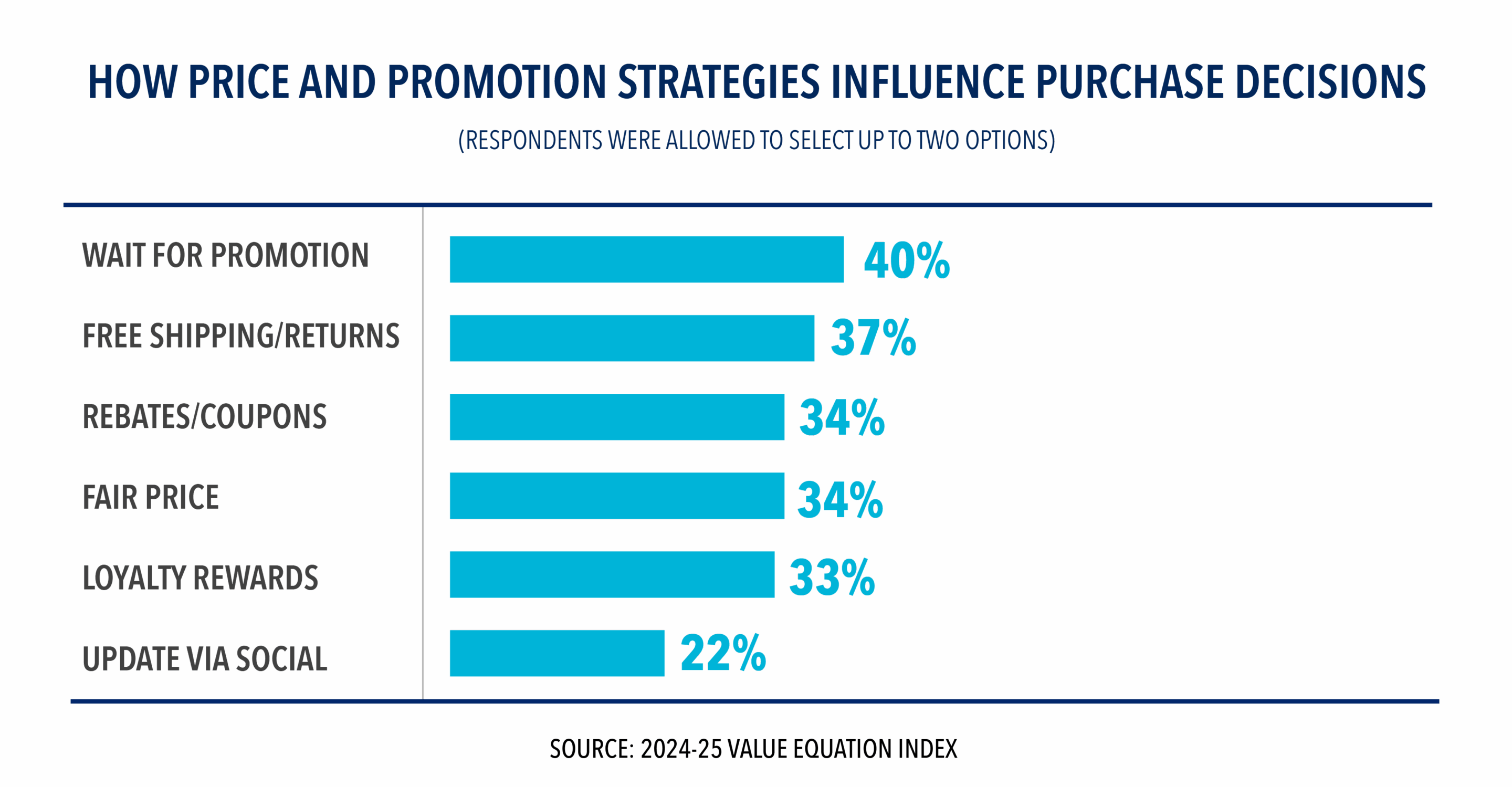
Consumer attitudes toward pricing and promotions consistently drive purchase decisions. Not surprisingly, 40% of the surveyed consumers indicated that they will wait for a promotion to make a purchase. Other shifts lend new importance to other purchase drivers: 33% indicated intent to maximize or use Loyalty Rewards programs (an increase of 14% YOY) and 22% of respondents expect retailers or brands to inform them of promotions via email or social media (an increase of 25% YOY).
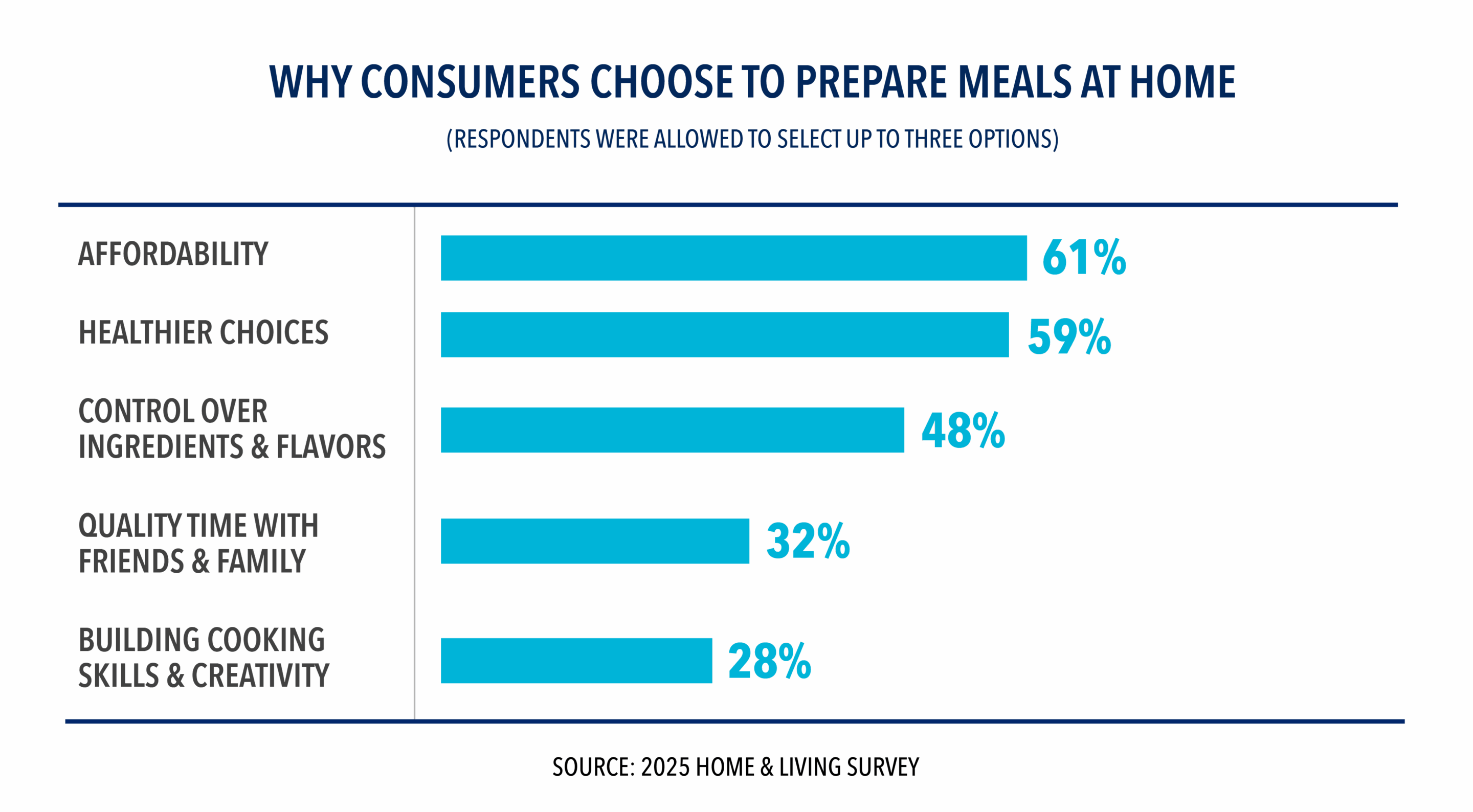
Economic concerns lead the reasons for home meal preparation, supported by the desire for more healthful eating. Both of these are enduring concerns and trends that will influence consumer lifestyles for years to come.
Nearly 90% of respondents prepare everyday household meals most or all of the time, regardless of generation. Home cooking for casual get-togethers held a healthy share of 55% of the audience. With the majority of respondents intending to cook at home significantly more in the coming year, casual get-togethers present a new opportunity for growth.
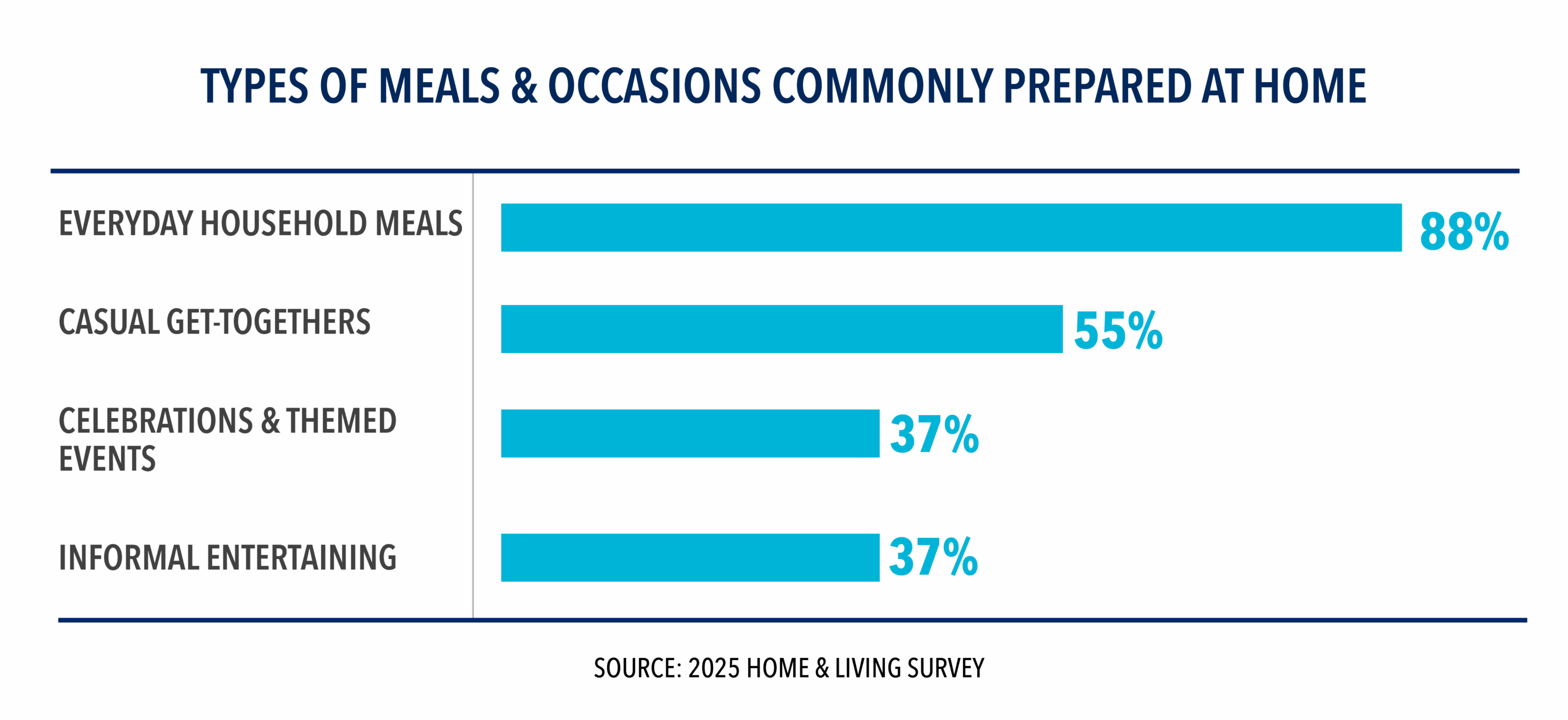
Nearly 90% of respondents prepare everyday household meals most or all of the time, regardless of generation. Home cooking for casual get-togethers held a healthy share of 55% of the audience. With the majority of respondents intending to cook at home significantly more in the coming year, casual get-togethers present a new opportunity for growth.

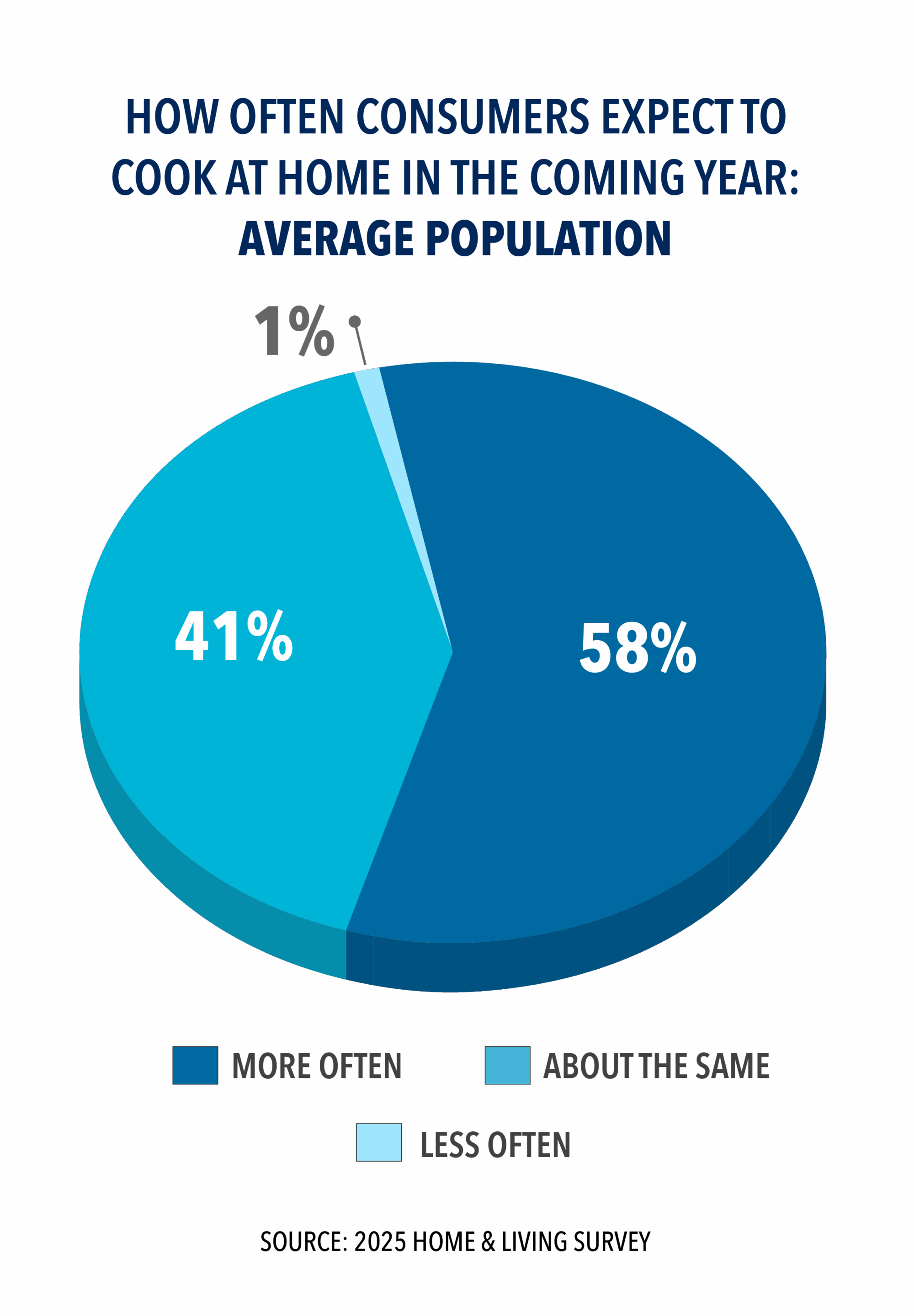
A healthy 58% of those surveyed plan on cooking at home more often in the coming year and only 1% intend to cook at home less. Millennials and Gen X lead the trend, with 69% and 63%, respectively, planning to increase their cooking at home throughout the coming year. It’s no surprise that weekday dinners dominated the mainly homemade meal category with 72% engagement. Weekday breakfasts wowed with 56% making it from scratch.
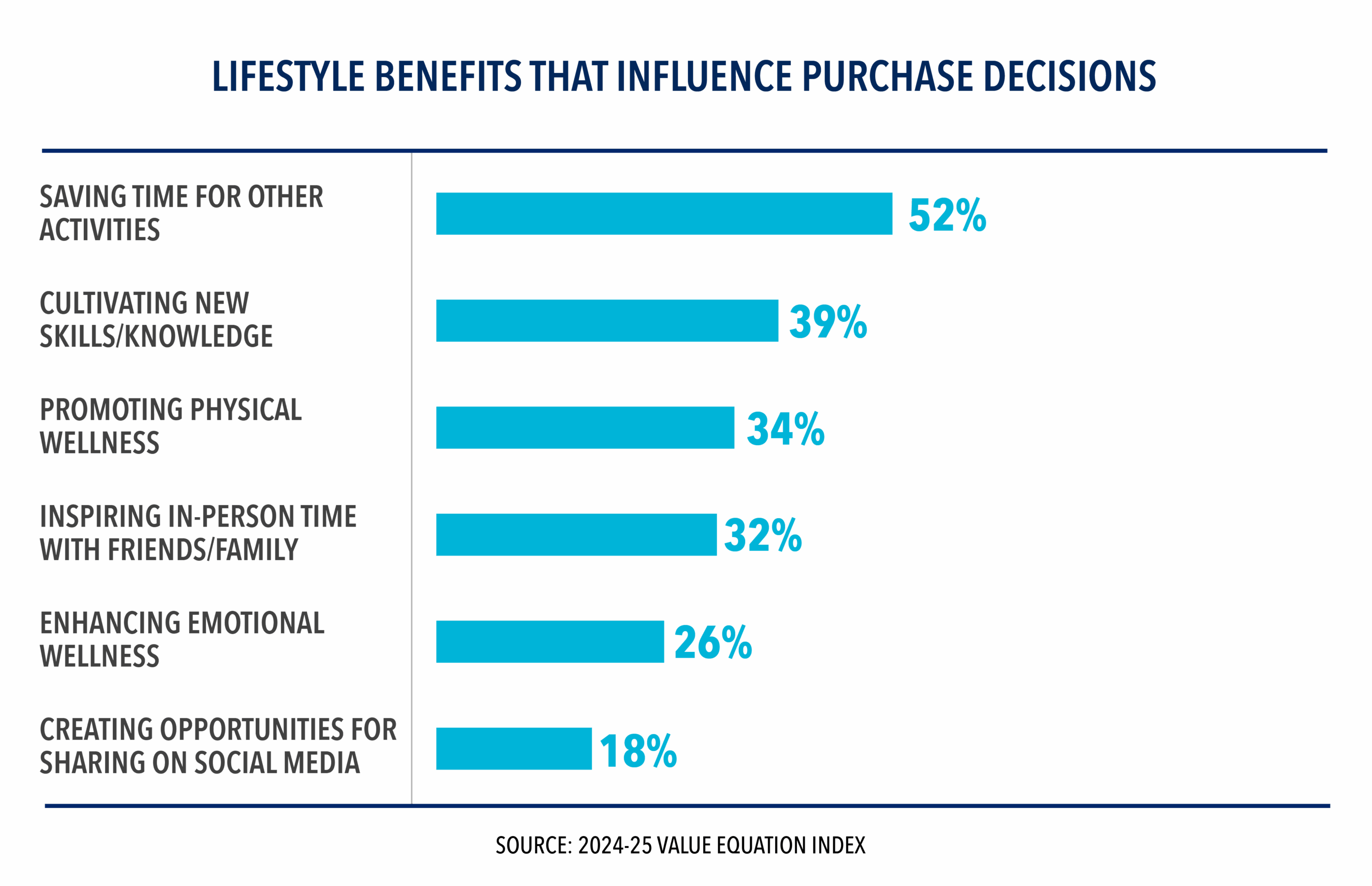
When considering household tasks, wellness and home food preparation, time spent remains a leading pain point for consumers. In fact, a dominant 52% of those surveyed made “saving time for other activities” the number-one lifestyle benefit influencing their purchase decisions. The number-two purchase influencer, ”cultivating new skills,” is up an impressive 19% from last year, supporting the intention stated earlier that people plan to cook at home significantly more in the coming year.
Many foods prepared at home are consumed elsewhere—for example, bagged meals, snacks, sandwiches, bowl meals, smoothies, salads, etc. With Americans returning to office work post-pandemic, it was no surprise that consuming these foods at work took the top position, selected by nearly half of respondents overall and 65% of Gen Z (over-indexing by 15%). The two runners-up surprised with 39% consuming during travel or commute and 38% consuming these homemade foods at friends’ homes, work events and the like.

Many foods prepared at home are consumed elsewhere—for example, bagged meals, snacks, sandwiches, bowl meals, smoothies, salads, etc. With Americans returning to office work post-pandemic, it was no surprise that consuming these foods at work took the top position, selected by nearly half of respondents overall and 65% of Gen Z (over-indexing by 15%). The two runners-up surprised with 39% consuming during travel or commute and 38% consuming these homemade foods at friends’ homes, work events and the like.
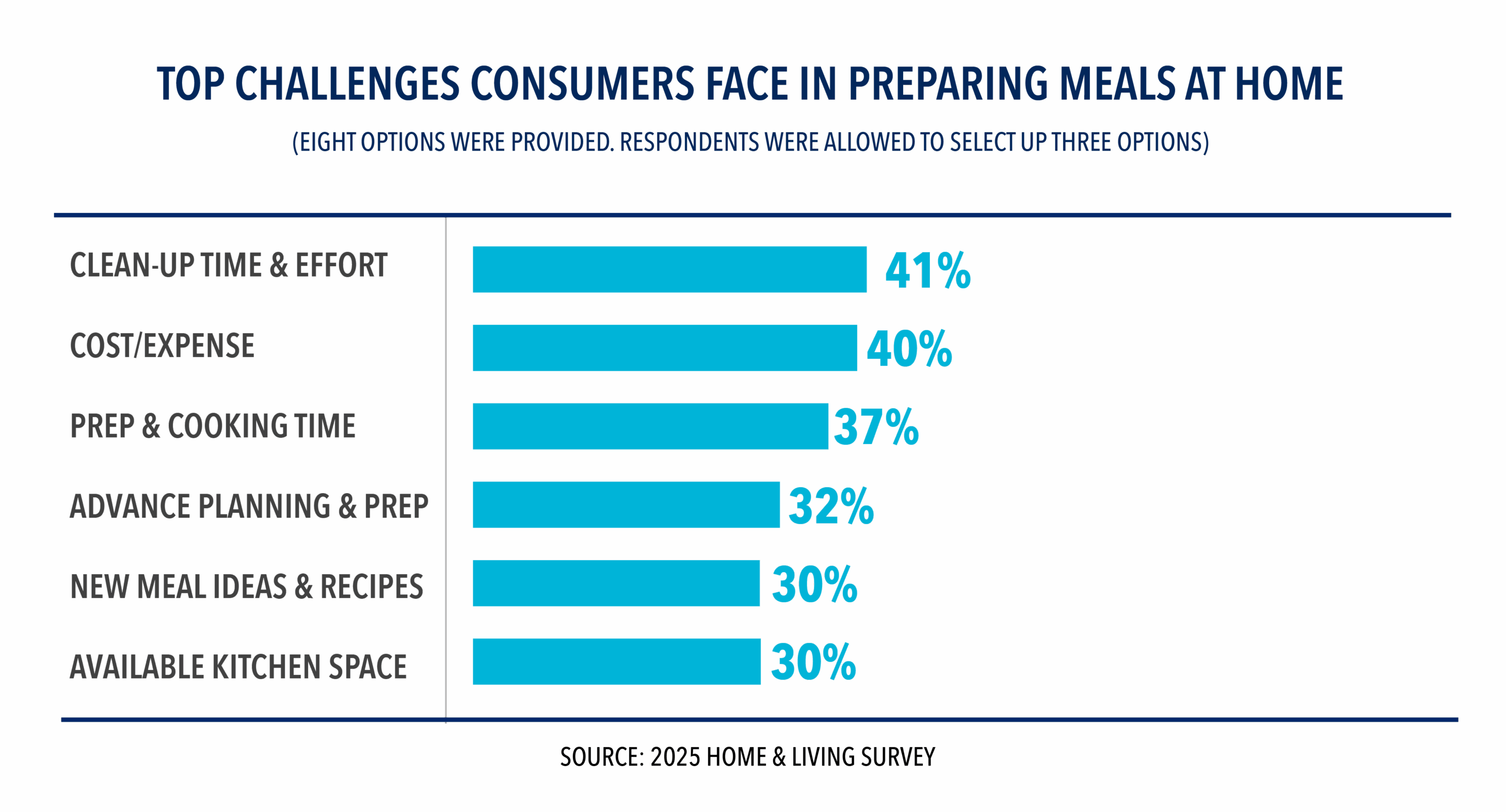
Despite its prevalence and popularity, home food preparation is a source of frustration for many consumers. Across all generations, those surveyed shared the same top three listed as their most challenging or difficult: 41% clean-up time and effort (led by Gen Z at 48%), 40% cost/expense (led by Gen Z at 46%) and 37% prep and cooking time (led by Gen Z at 48%).
Decision Drivers: The Informed (and Influenced) Modern Consumer
What defines value has expanded beyond the simplicity of product features and benefits.
The purchase decision has become nuanced to the degree that issues of trust and quality weigh in alongside leading concerns like brand, price and promotion. Alongside these considerations, new product discovery has undergone a surprising shift, favoring social media and recommendations from friends and family across generations.
When it comes to influencing new product discovery and purchase, social media took the top position, selected by 50% of all respondents. Recommendations from family and friends took a close second, selected by a solid 46%.
It is to be expected that new product discovery varies greatly by generation. While social media was the top influencer, with an average of 50% of respondents selecting, Gen Z over-indexed at 58% and Boomers under-indexed at 40%. Still, with 46% selecting, family and friends were close behind, with only 5% variance between generations.
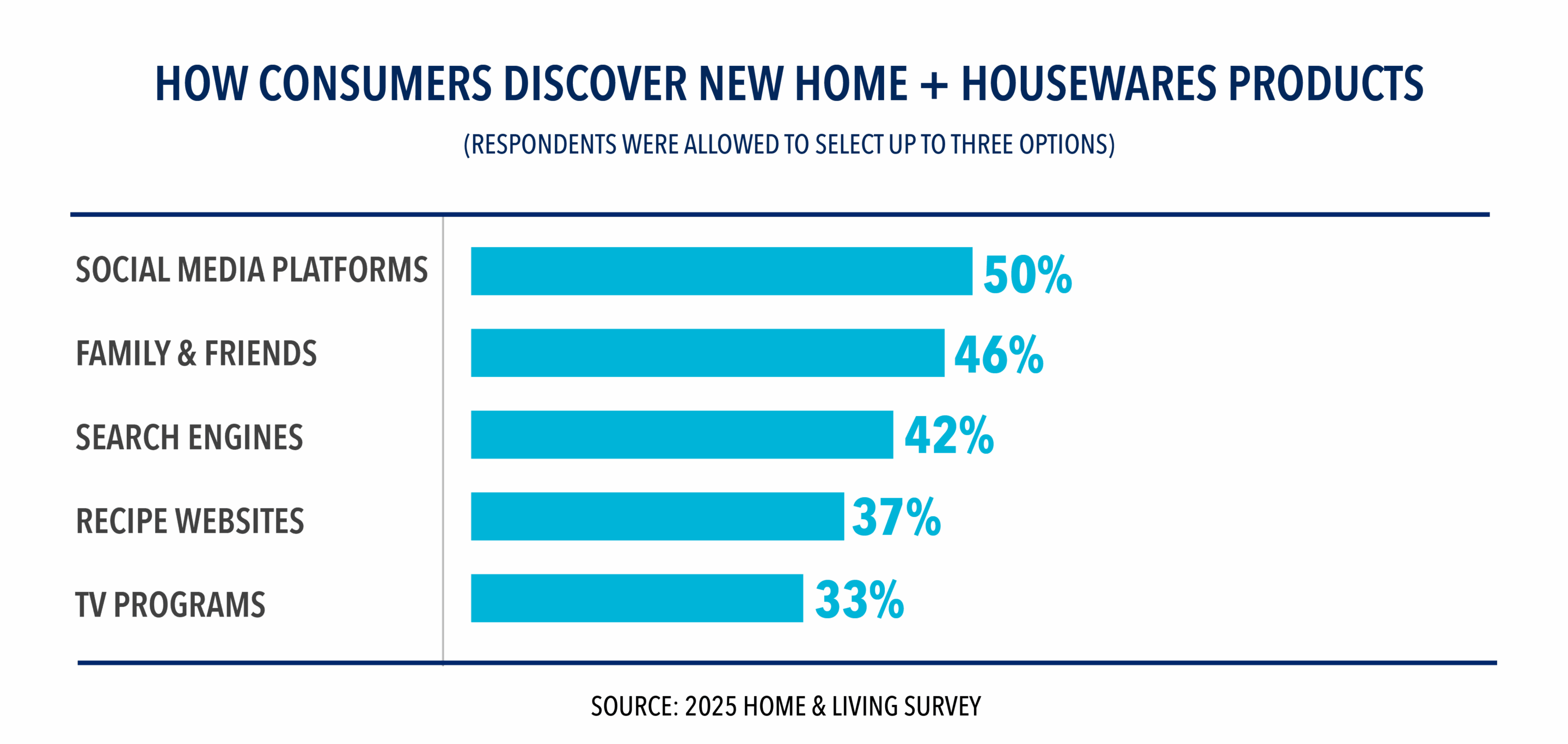
When it comes to influencing new product discovery and purchase, social media took the top position, selected by 50% of all respondents. Recommendations from family and friends took a close second, selected by a solid 46%.
It is to be expected that new product discovery varies greatly by generation. While social media was the top influencer, with an average of 50% of respondents selecting, Gen Z over-indexed at 58% and Boomers under-indexed at 40%. Still, with 46% selecting, family and friends were close behind, with only 5% variance between generations.

When asked about the most frequent purchase locations for home and housewares products, mass market retailers took the top position (60%). Online purchasing took second place with a 50% share, a preference shared equally across all generations. Surprisingly, grocery came in a solid third at 39%, a number lowered primarily by Boomers, who lagged 11% below the average.
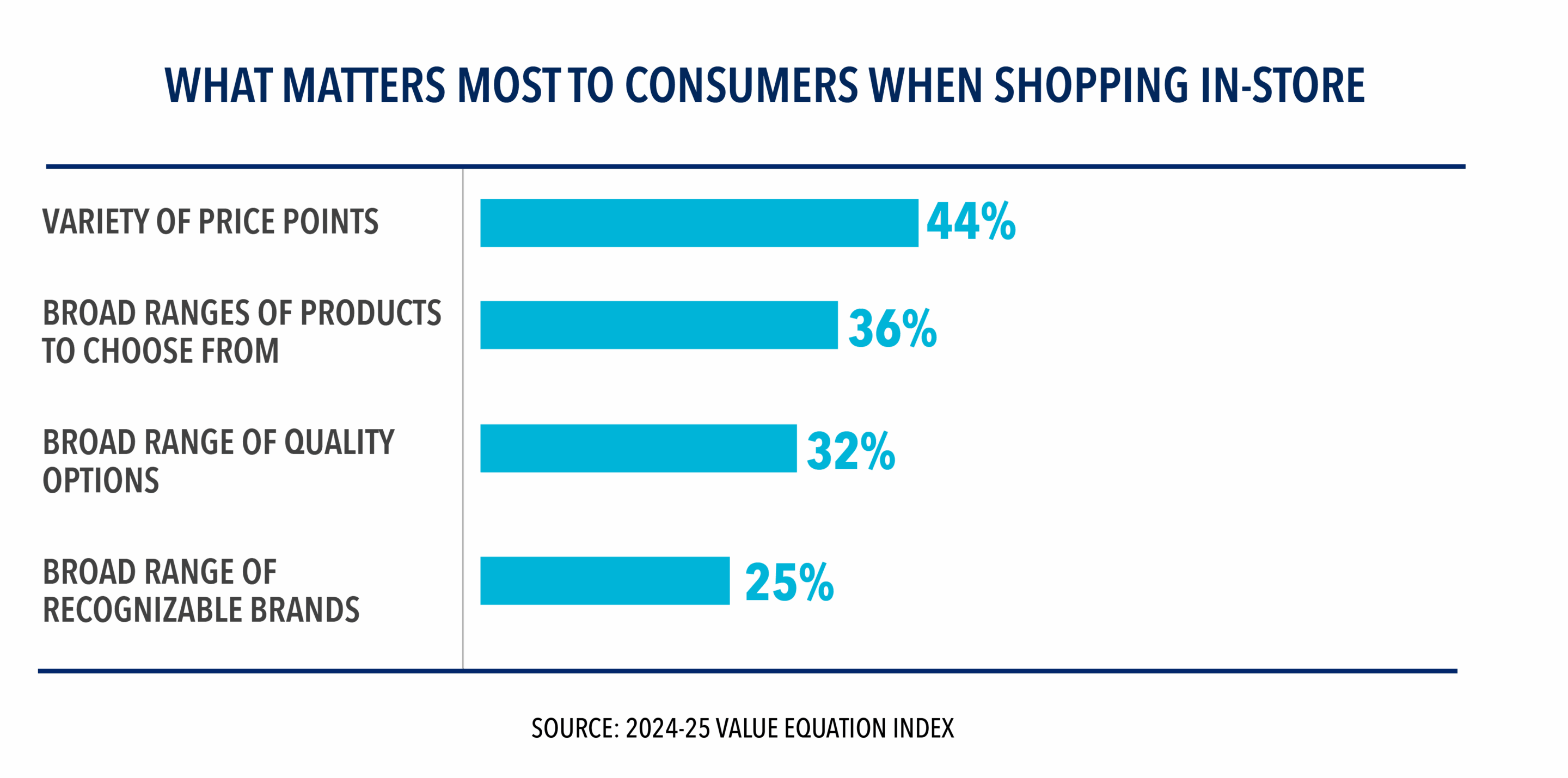
Shoppers are prioritizing selection and brand variety in-store, with notable gains year over year in product range (+11%), price options (+11%) and recognizable brands (+5%), while interest in quality range dropped 26%.
Shoppers are prioritizing selection and brand variety in-store, with notable gains year over year in product range (+11%), price options (+11%) and recognizable brands (+5%), while interest in quality range dropped 26%.
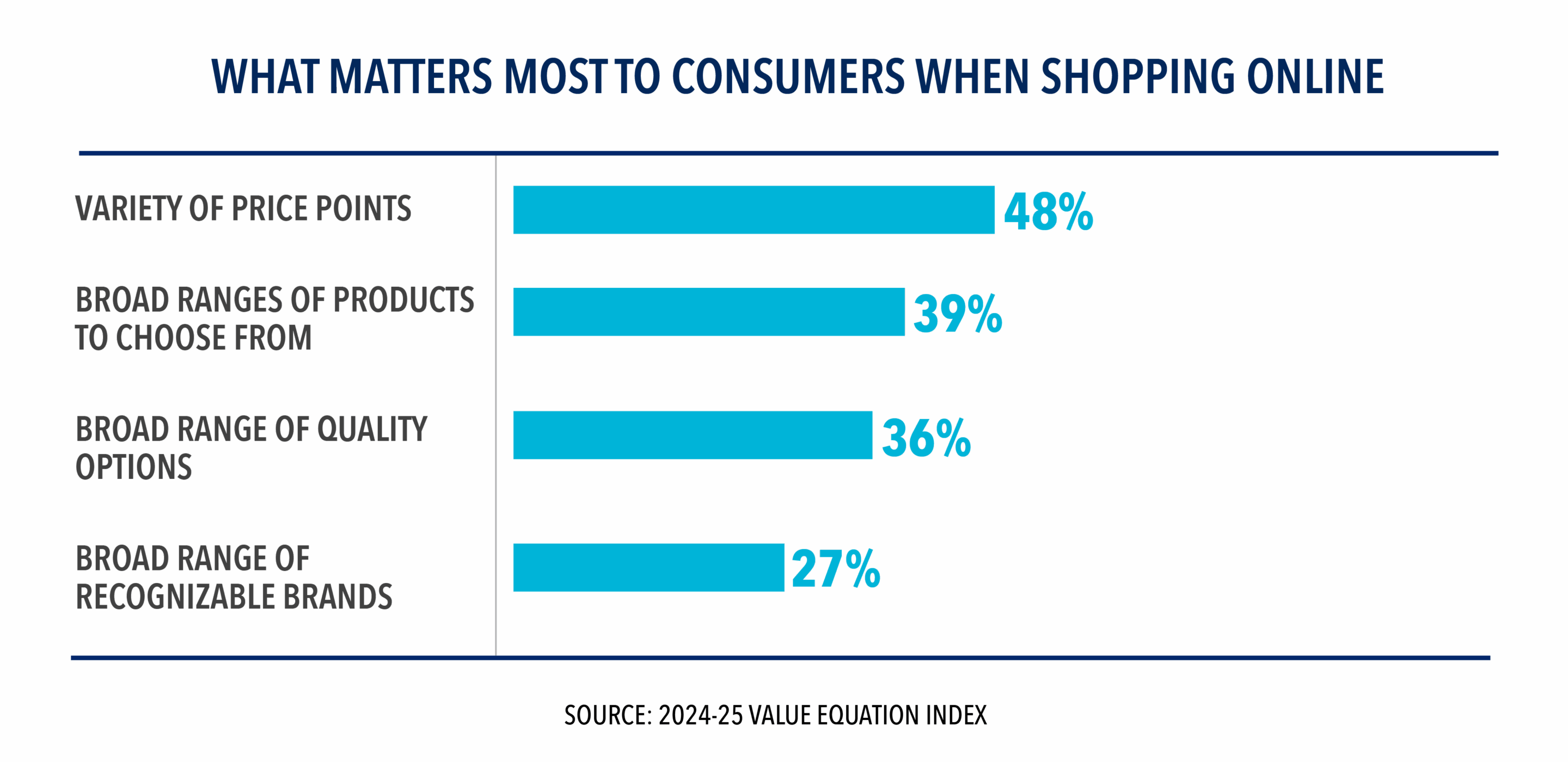
When shopping online, consumers value a variety of price points most (48%), while year-over-year interest in broad product selection (+11%) and recognizable brands (+8%) is rising.
While pricing and promotions have gained importance in recent months, the top three purchase drivers are trust, brand and quality. These are clear indicators that home and housewares consumers are making more nuanced purchase decisions, factoring in more than price alone.

While pricing and promotions have gained importance in recent months, the top three purchase drivers are trust, brand and quality. These are clear indicators that home and housewares consumers are making more nuanced purchase decisions, factoring in more than price alone.

Trust in the retailer or brand is particularly critical, with 75% indicating that it is very or extremely important. Consumers choosing “extremely important” rose 64% year over year.
For the third consecutive year, the number one trust generator for consumers was reputation for reliability and durability, selected by 65% of respondents, up 8% year over year. Prior personal experience (52%) also ranked highly, as did recommendation from others (32%), which gained 18% year over year to take third position.
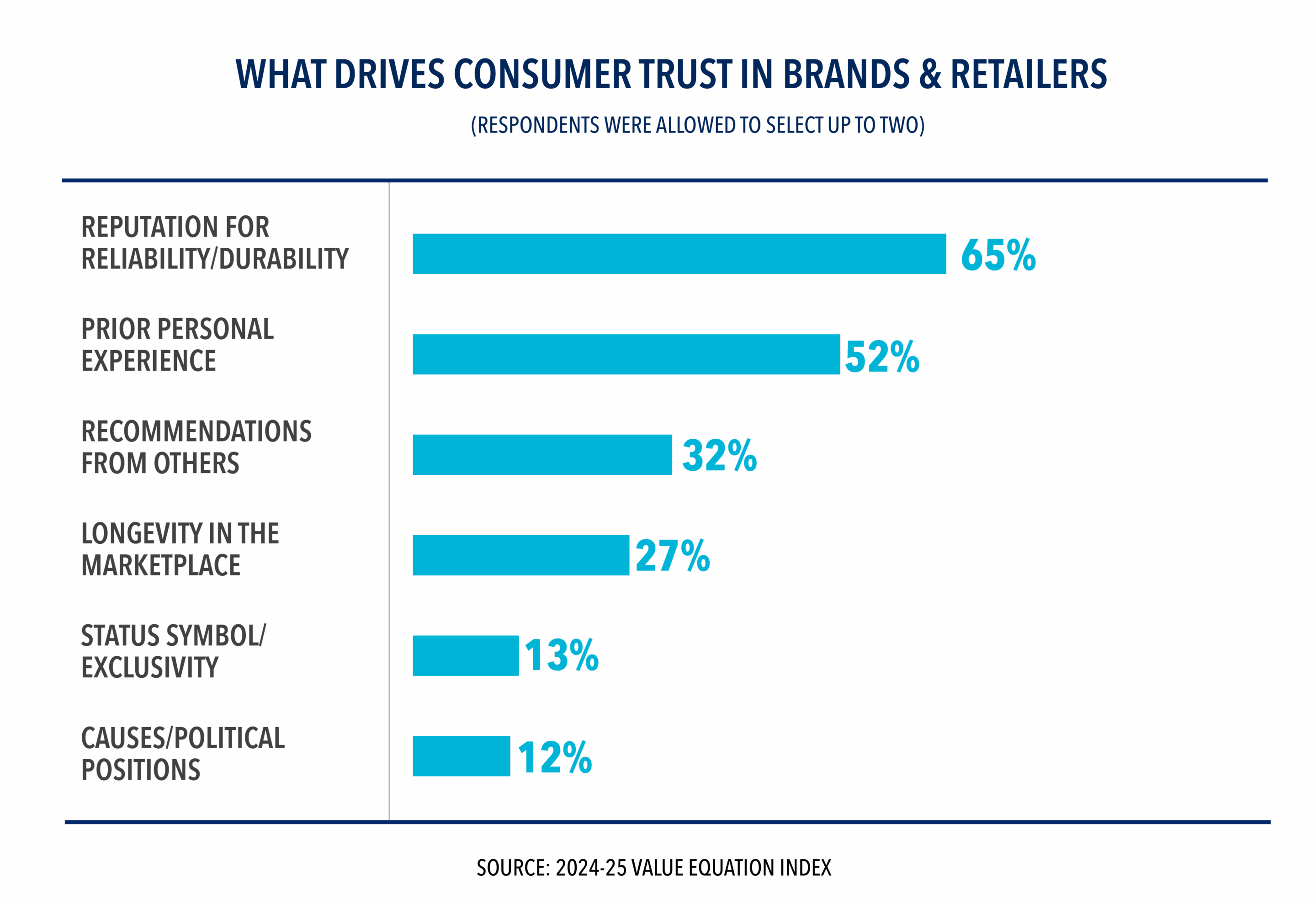
For the third consecutive year, the number one trust generator for consumers was reputation for reliability and durability, selected by 65% of respondents, up 8% year over year. Prior personal experience (52%) also ranked highly, as did recommendation from others (32%), which gained 18% year over year to take third position.
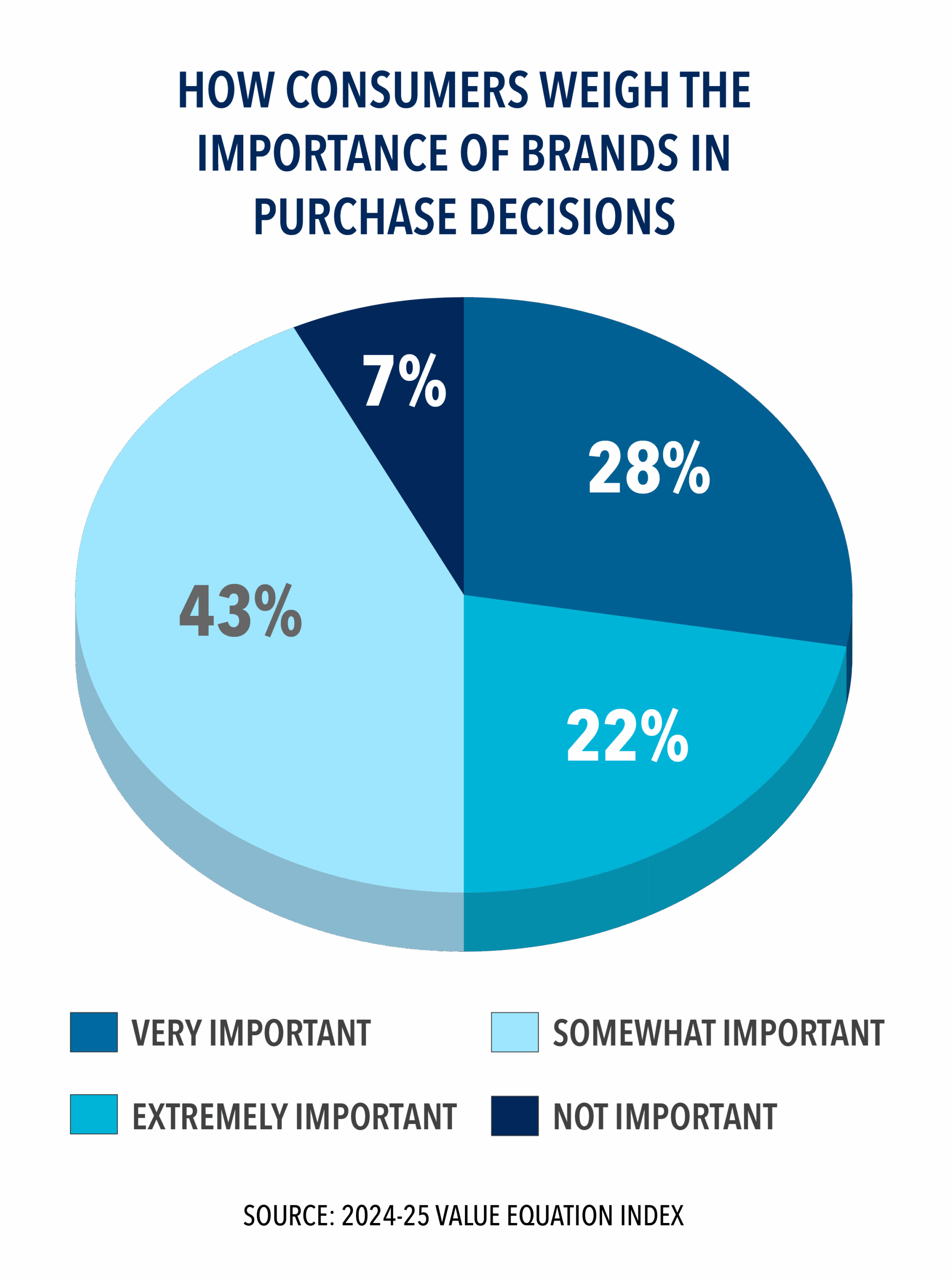
When asked about the importance of brands when shopping for home or housewares, those indicating “very” or “extremely” important represented 50% of all respondents. Notably, those selecting “extremely important” (22%) showed a year-over-year increase of 124%.
As consumers identified quality as the third-ranked purchase driver for home and housewares, it is critical to note that durability and reliable performance are the quality traits that most influence their purchase decisions in these categories. Durability and reliable performance reflect an awareness of longer-term use and subsequent value for spend.
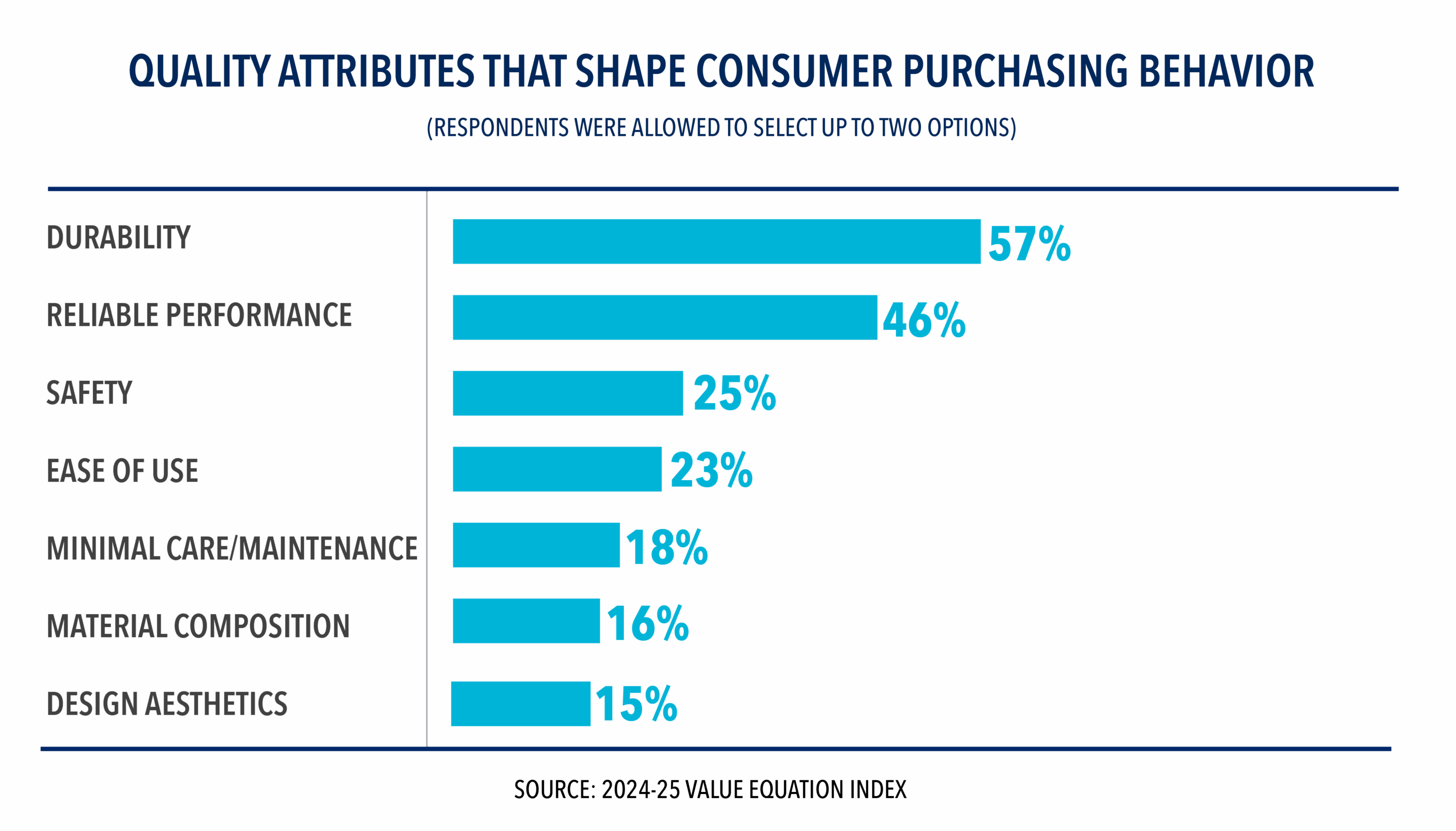
As consumers identified quality as the third-ranked purchase driver for home and housewares, it is critical to note that durability and reliable performance are the quality traits that most influence their purchase decisions in these categories. Durability and reliable performance reflect an awareness of longer-term use and subsequent value for spend.
Truth and Transparency: Expectations Expand As Responsibility Continues To Influence Intent
Concerns related to social and environmental responsibility continue to rise as a key consideration for consumers when making a purchase.
The expanding importance to Gen X and Boomers speaks to the significance of these concerns on higher net worth consumers as well as the influence of younger generations.
Clearly, a retailer or brand’s social responsibility influences consumers’ purchase decisions, with 50% of those surveyed stating it is “very” or “extremely” important. These positions have seen marked increases year over year, up 18% and 76%, respectively.
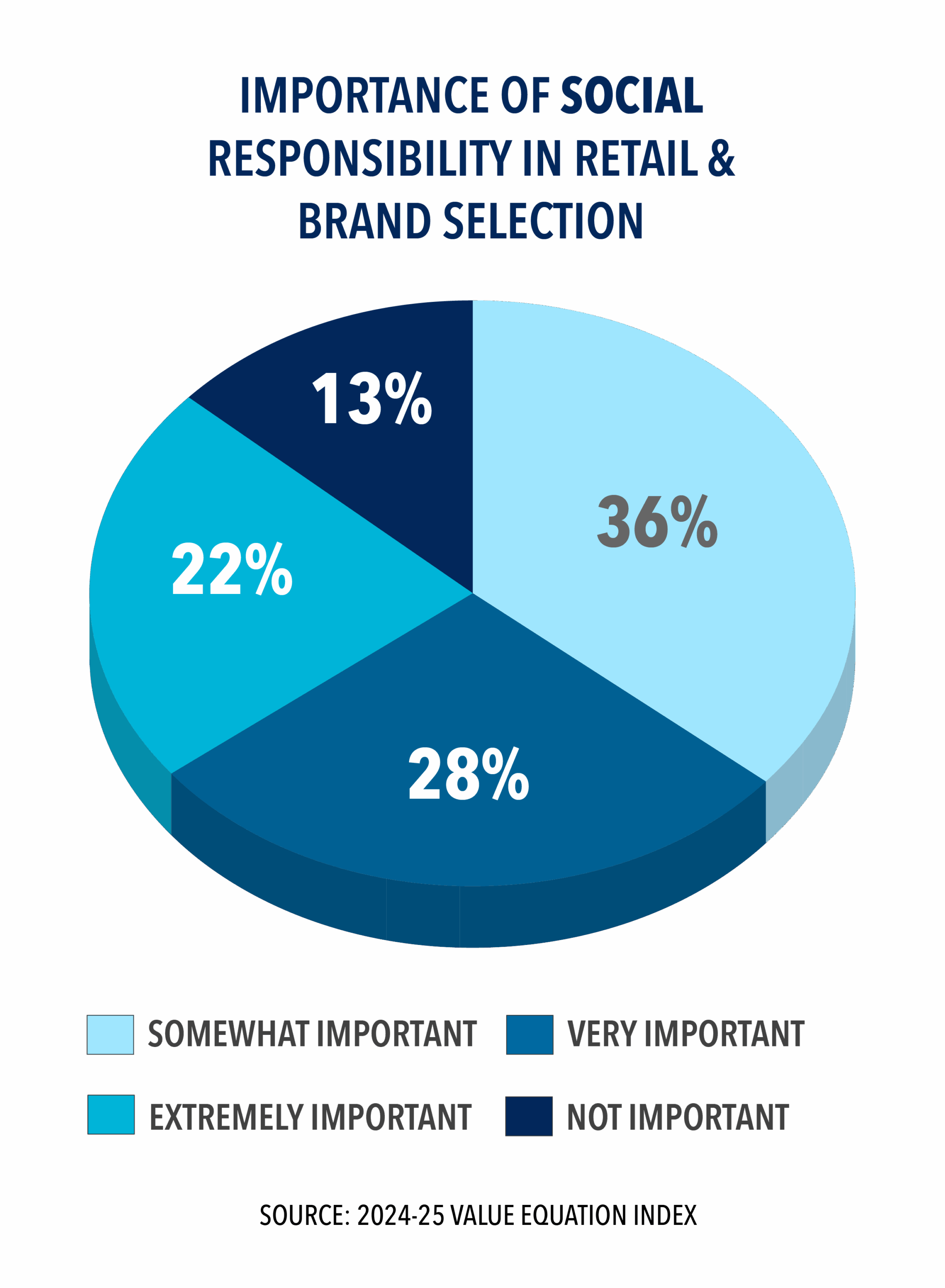
Clearly, a retailer or brand’s social responsibility influences consumers’ purchase decisions, with 50% of those surveyed stating it is “very” or “extremely” important. These positions have seen marked increases year over year, up 18% and 76%, respectively.
Similarly, a retailer or brand’s environmentally responsible behaviors also influence consumers’ purchase decisions, with 58% of those surveyed stating that it is “very” or “extremely” important. These positions have seen marked increases year over year, up 29% and 33%, respectively.
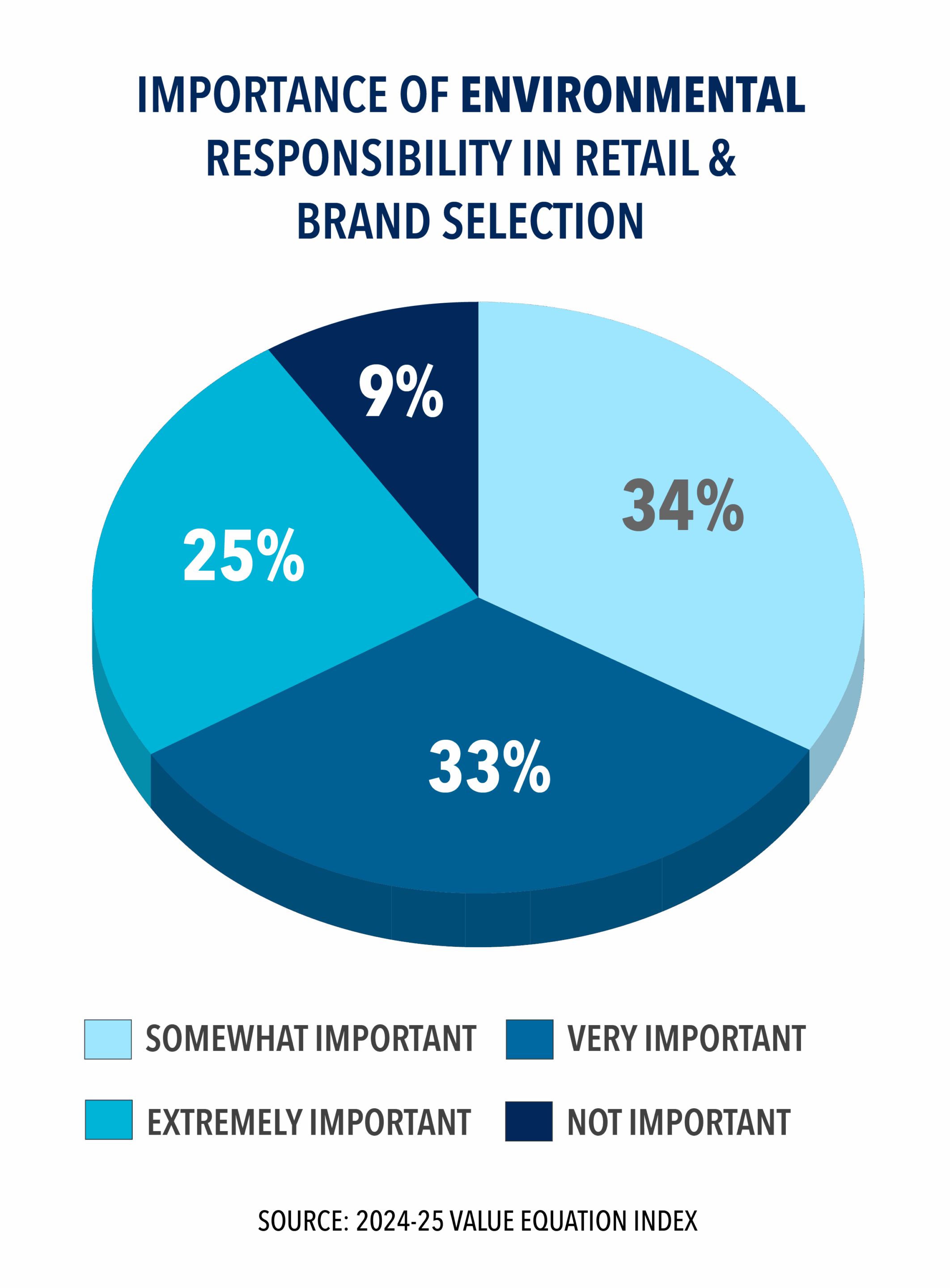
Similarly, a retailer or brand’s environmentally responsible behaviors also influence consumers’ purchase decisions, with 58% of those surveyed stating that it is “very” or “extremely” important. These positions have seen marked increases year over year, up 29% and 33%, respectively.
The Work of Wellbeing: Intersections of Obstacle and Opportunity
Wellness concerns continue to present a perplexing balancing act for the modern consumer.
That said, balance is the watchword here. Across generations, nutritional and emotional wellness have risen in priority, nearly equal to that of physical wellness. Emotional stressors among Millennials and Gen Z are creating both a need and an opportunity for product innovations that help consumers address these issues and others that affect overall wellbeing.

Consumers’ top three wellness concerns were clear. Physical wellness is most important, selected by 59% of respondents, but Boomers are taking the lead with 65% selecting it. Nutritional wellness came next, with 51% selecting it. The importance of nutritional wellness is spread evenly across generations, except for a noteworthy spike among Boomers, with 59% selecting it. Emotional wellness was the top concern for 46% of those surveyed with notable generational variance. Gen Z came in at 10% above average (56%), reflecting the broad range of stressors faced by that generation. Boomers, with a healthier 40%, reflected a more relaxed perspective.
Physical activity was the aspect of well-being respondents wanted to improve the most, with 51% selecting it as a priority. Sleep and restfulness were also a priority at 45%, a concern shared evenly across generations. Noteworthy is the balanced importance of the top five – only a 5% variance among them – that presents a broad field of growth opportunities across interwoven product categories.
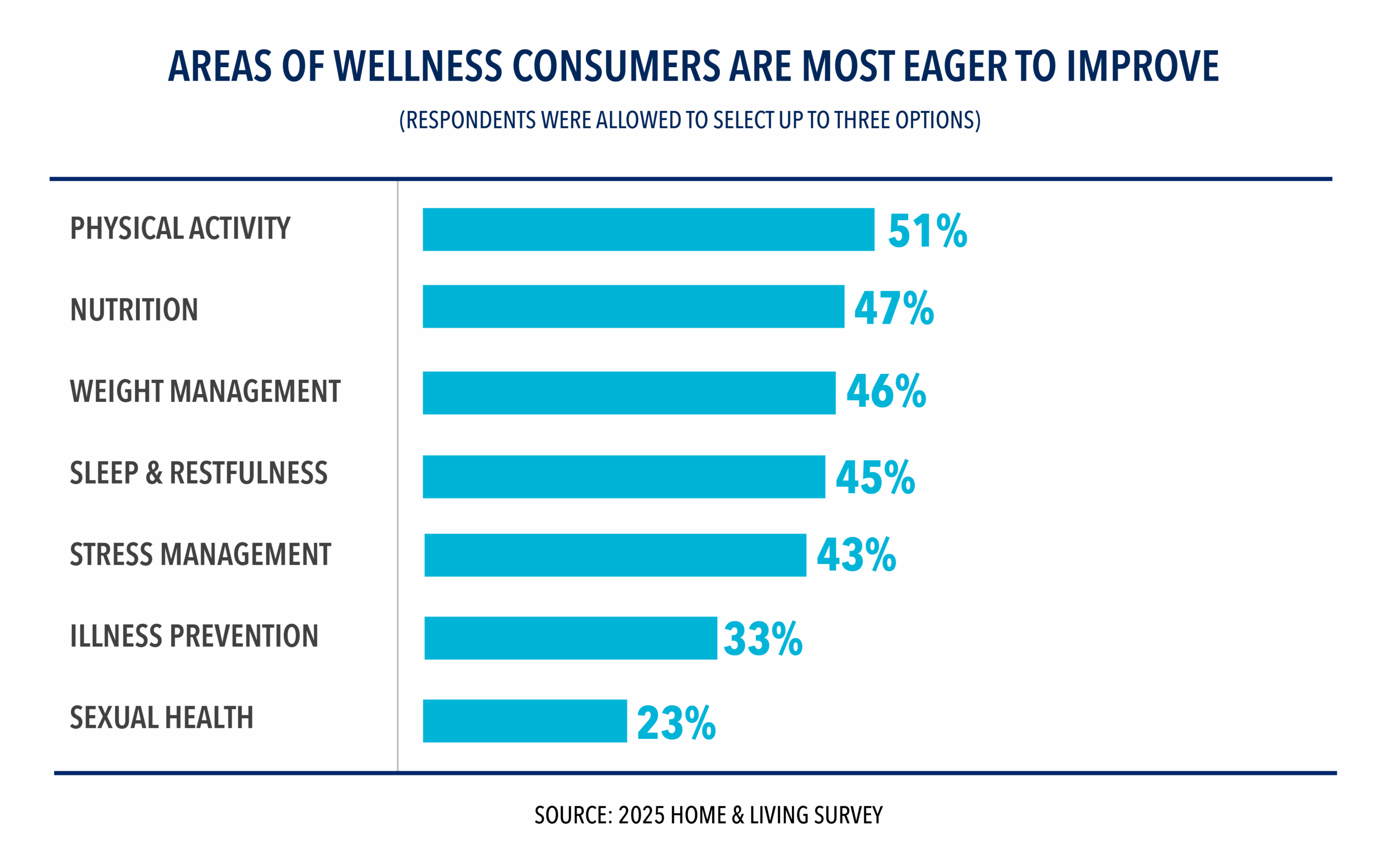
Physical activity was the aspect of well-being respondents wanted to improve the most, with 51% selecting it as a priority. Sleep and restfulness were also a priority at 45%, a concern shared evenly across generations. Noteworthy is the balanced importance of the top five – only a 5% variance among them – that presents a broad field of growth opportunities across interwoven product categories.

Purchase intent for health and wellness products in the coming year is clearly focused on healthy meal creation (42% selected) and sleep and relaxation (38% selected). The nearly equal purchase intent across products in primary and secondary categories here indicates a breadth of opportunities to serve multiple consumer needs and aspirations. Hydration spiked 7% for Gen Z to 40%. Home environment was in the top four for all respondents, at 30%, except for Boomers, who were less engaged at 20%.
Consumers’ top two purchase driving features and benefits both speak to the desire for a “less stress, less mess” experience. This also dovetails with the desire for time savings and expanded product value evident in other survey responses. Ease of use increased by 5%, multiple functions by 14% and new technologies by 23% year over year.
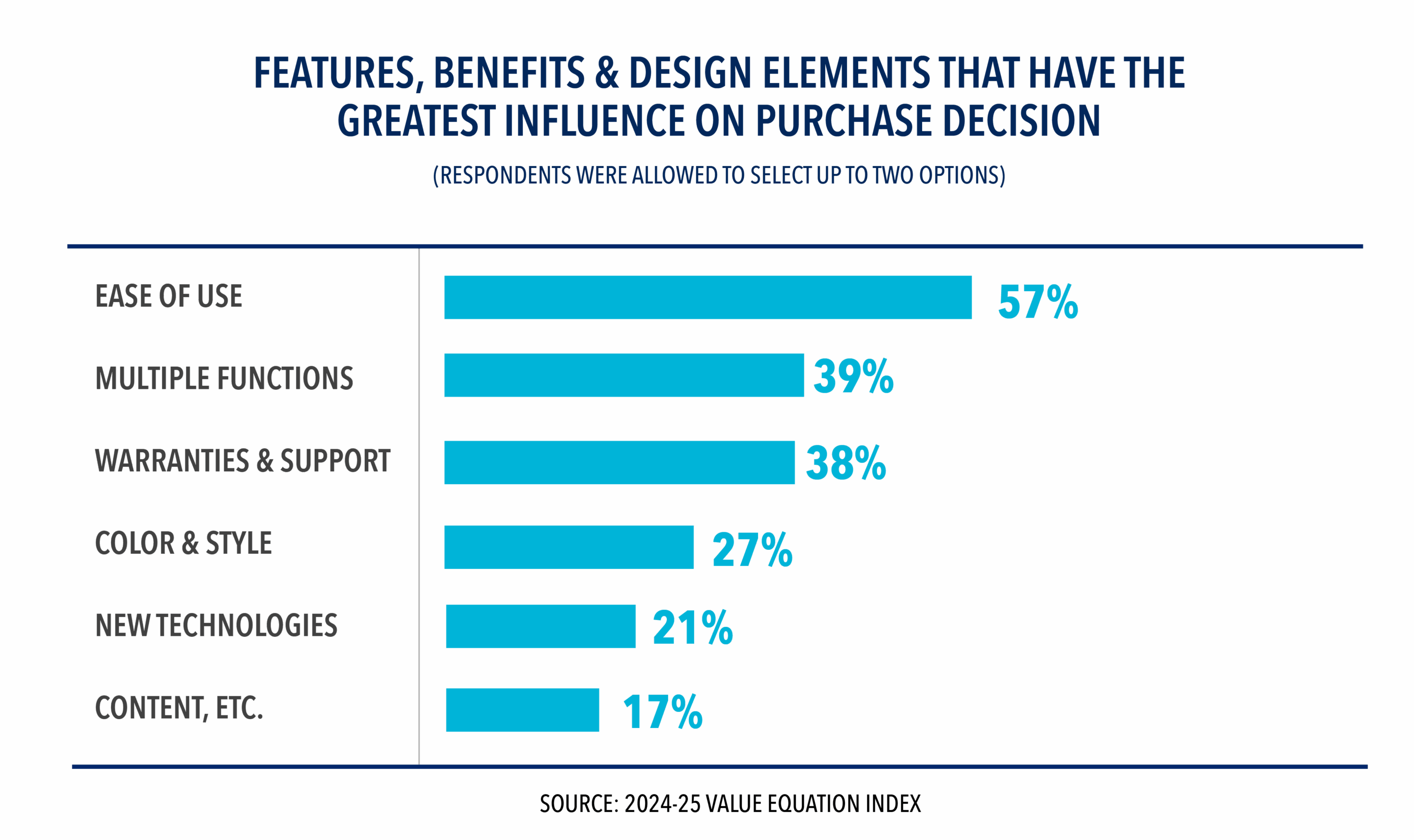
Consumers’ top two purchase driving features and benefits both speak to the desire for a “less stress, less mess” experience. This also dovetails with the desire for time savings and expanded product value evident in other survey responses. Ease of use increased by 5%, multiple functions by 14% and new technologies by 23% year over year.
Trouble with Tasks: Frustration Directs Function and Features
A close look at a time-starved consumer reveals new challenges and obstacles that consumers face in their daily household tasks and in pursuing their overall desired lifestyle.
While ease of use and multifunctionality lead desired product attributes, intangibles such as minimizing mess and reducing physical strain are surprisingly important across consumer generations.
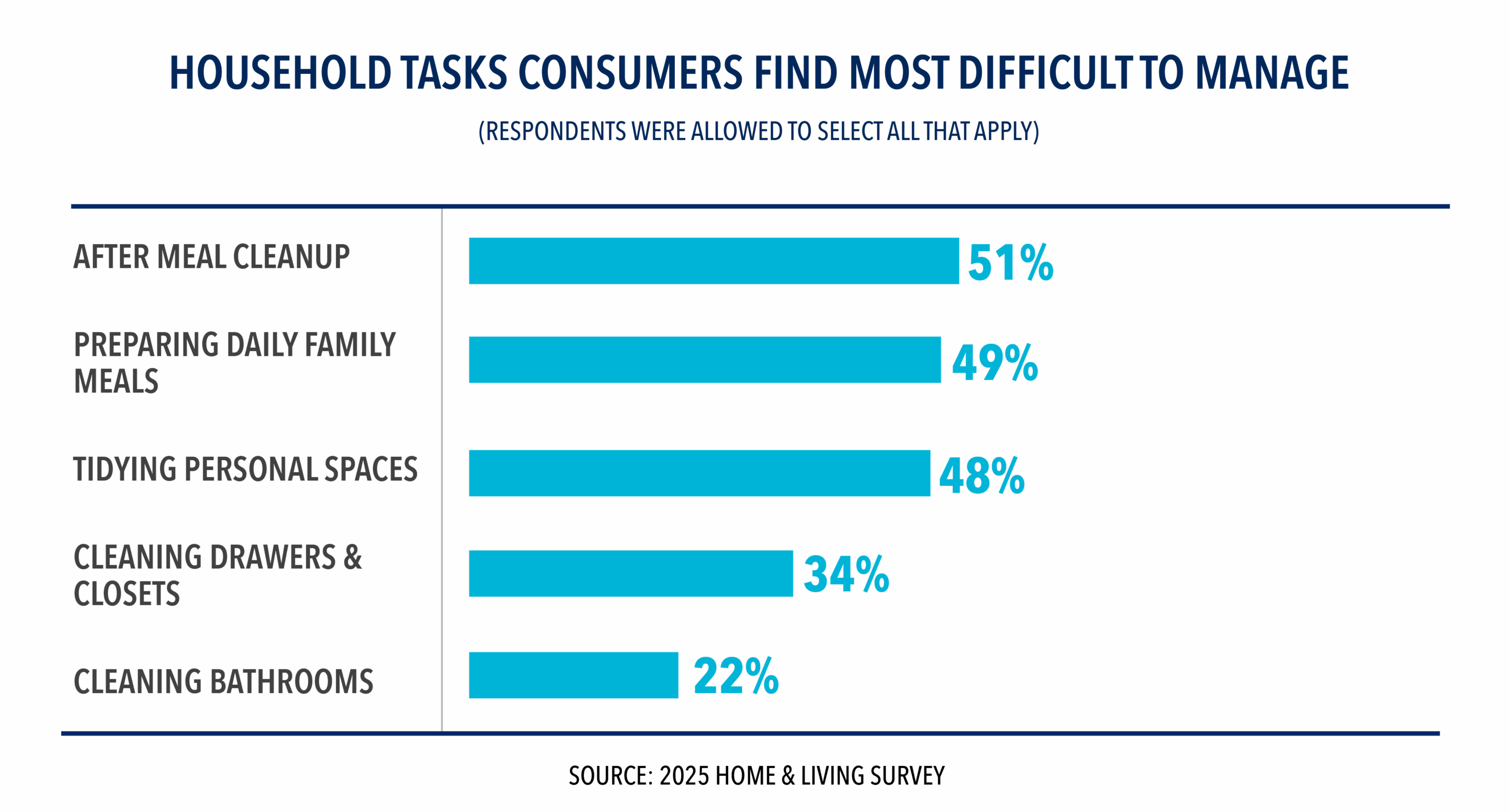
Selecting from a list of 13 household tasks, the three most challenging were quickly identified as clear front-runners. After-meal cleanup was the top challenge at 51%. Daily meal preparation was a close second at 49% overall, but with generational disparities: Millennials at 57% and Gen X at 55% both over-indexed; Boomers found this much less of an issue at 32%; males (60%) struggled more than females (40%). Tidying and maintaining personal spaces nearly tied for second with 48% selecting it as an obstacle and again with notable variances: Millennials at 56% and Boomers at only 41%; urban dwellers at 56%, suburban at 41% and rural at 44%. All of these represent consumer pain points that need product solutions.
When asked what made the tasks selected so challenging, respondents indicated that time spent was the biggest challenge for all generations at 47%, but Gen Z felt it most, with 60% selecting (28% above the average). Across all generations, the messy and unpleasant factor was the number two obstacle. Physical limitations took third place at 27% overall, but notable generational disparities. Boomers found this to be a much greater problem at the 40% mark. Only 16% of Gen Z noted physical limitations as a hindrance.
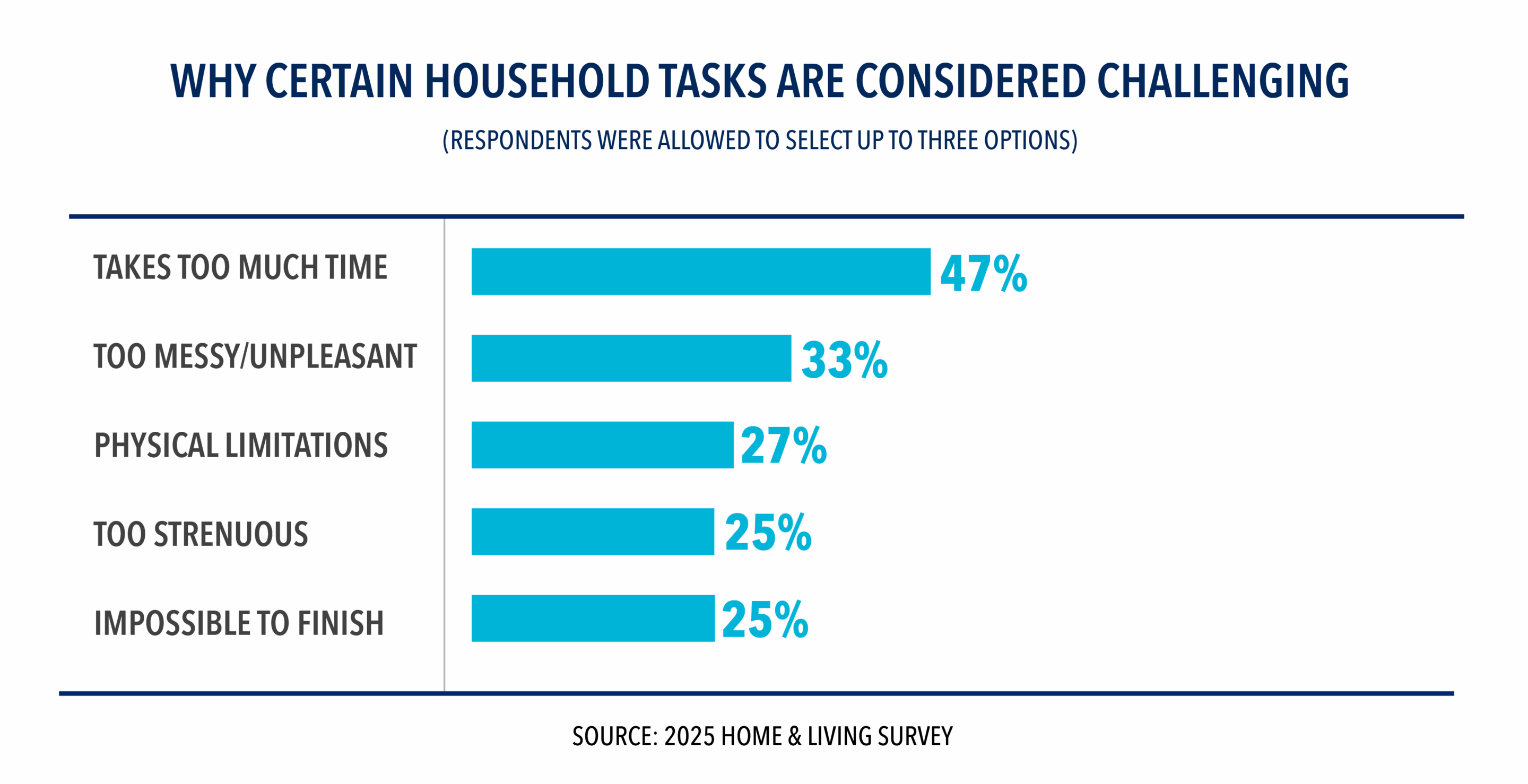
When asked what made the tasks selected so challenging, respondents indicated that time spent was the biggest challenge for all generations at 47%, but Gen Z felt it most, with 60% selecting (28% above the average). Across all generations, the messy and unpleasant factor was the number two obstacle. Physical limitations took third place at 27% overall, but notable generational disparities. Boomers found this to be a much greater problem at the 40% mark. Only 16% of Gen Z noted physical limitations as a hindrance.
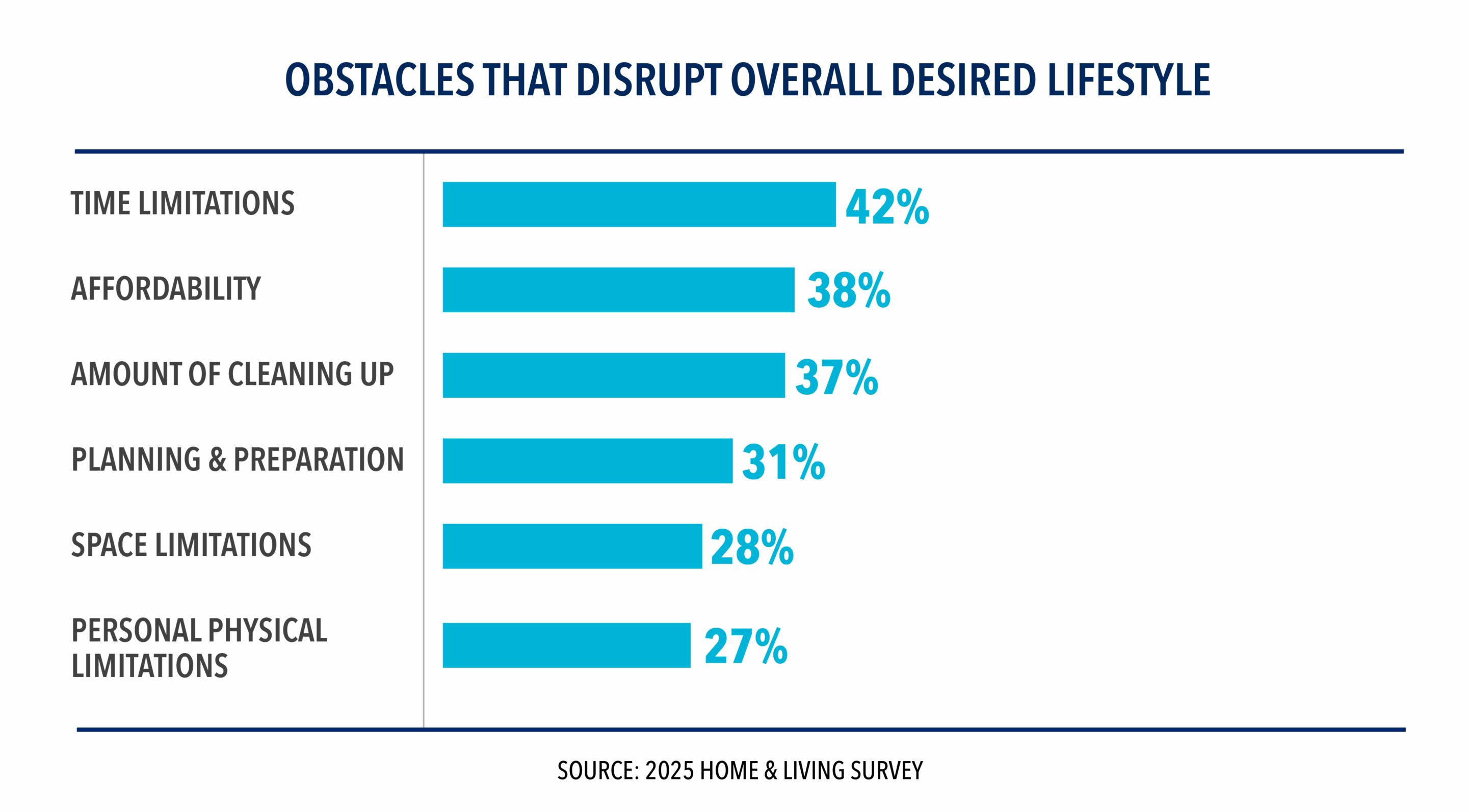
Time limitations took the lead, selected by 42% of respondents, although it was more keenly felt by Gen Z, with 54% selecting, and less of an issue for Boomers at 31%. Affordability was the second most significant concern at 38% and was a shared issue across generations, but it was a much larger obstacle for Gen Z, with 46% selecting it. The amount of cleanup involved in everyday living was close behind and was perceived as a pain point evenly across all generations.
Home & Living Survey Methodology: This research was conducted in the second half of 2024 using a national sample of household purchasers, with a maximum margin of error of ±3%. The sample was census-balanced by age (excluding Gen Z under 18), gender, and major geographic regions. Household income was restricted to $25,000–$199,000 pre-tax. Only respondents who answered “yes” to regularly cooking at home for themselves and others were included. Additional filters ensured responses came from individuals with meaningful influence over household purchasing decisions. All other demographic and household composition factors were left unrestricted.
Value Equation Index Methodology: The 2024 Value Equation Index survey was conducted via SurveyMonkey in the first half of 2025. The survey comprised 38 questions and garnered 1,226 qualified responses from U.S.-based consumers, aged 18 to 78. Respondents were screened to include primary household decision-makers for groceries, personal care, home maintenance, furnishings, supplies, and services. The final sample reflected a gender-balanced mix (30% male, 70% female), calibrated against national statistics for household purchase influencers, and encompassed household incomes ranging from $50,000 to $200,000. Regional representation encompassed all U.S. regions, without any specific geographic balancing. The survey achieved an 89% qualification rate, with a 7% abandonment rate and an 11% disqualification rate. Basic census balancing was applied to adjust the age distribution. The estimated margin of error is ±2.86% at a 95% confidence level.
View Other State of the Industry Installments: