
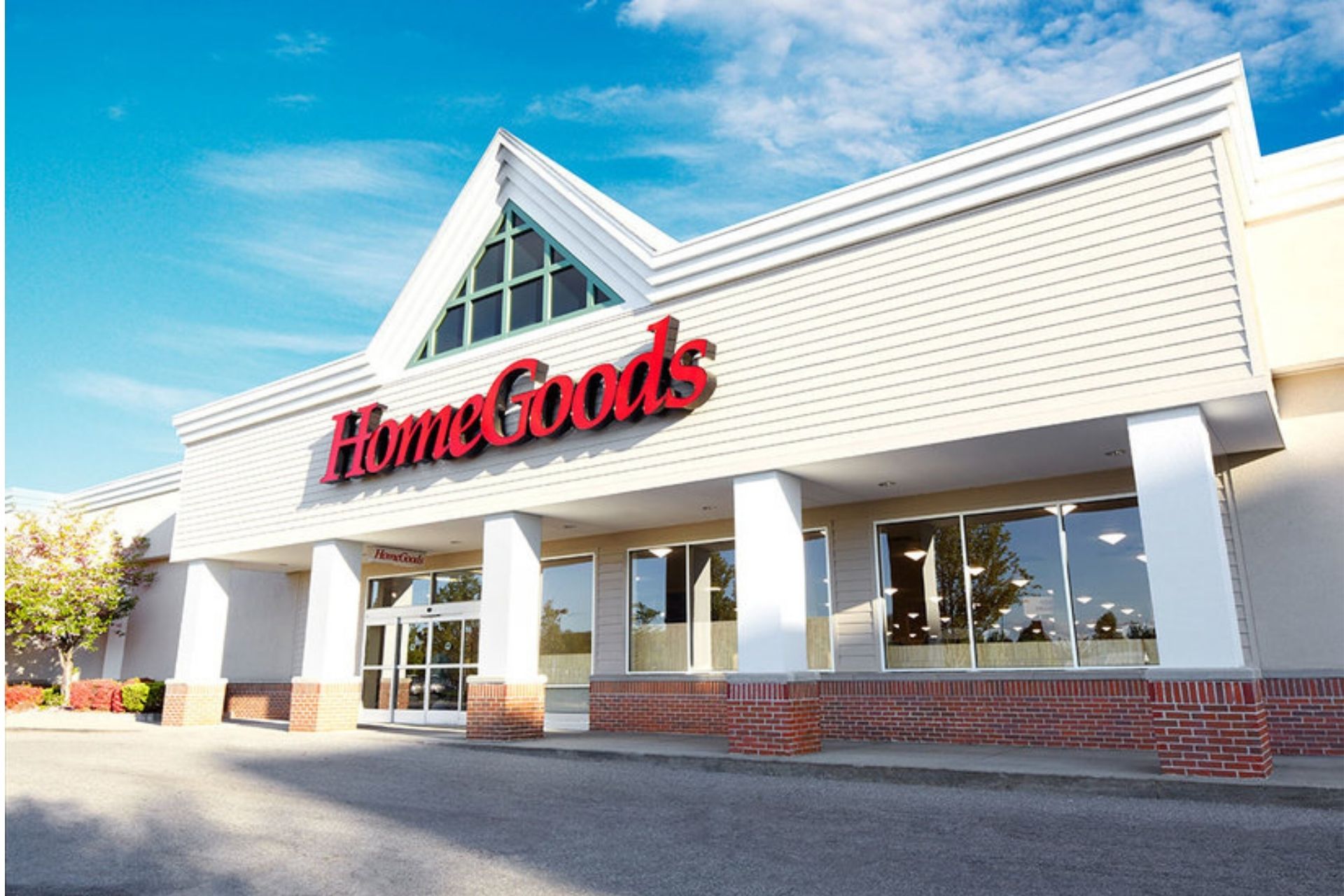
Within the TJX Cos. portfolio of brands, led by the Marmaxx division with T.J. Maxx and Marshalls, HomeGoods has become a critical growth vehicle for the parent company.
Among middle-market domestic products retailers, HomeGoods has moved into a central position, becoming the place where many consumers go first when they are considering purchases for their households. Meanwhile, during a time of global trade and economic uncertainty, TJX recognizes it can drive HomeGoods growth despite, or perhaps even because of, tariffs.
Amid such uncertainty, off-price retailers often have an edge as more consumers look to the channel for deep discounts on branded and better goods. During the TJX’s fourth-quarter conference call, company CEO Ernie Herrman spent much of the presentation and discussion with analysts focused on HomeGoods. He expressed confidence in the ability of the company’s banners to attract consumers and procure merchandise despite the looming threat of tariffs. Herrman said the company’s sourcing capability is extensive enough to adjust readily as tariffs emerge and evolve. He was upbeat about the company’s prospects overall, while pointing out that immediate store growth plans include almost as many HomeGoods stores as Marmaxx locations. HomeGoods’ growth continued in the first quarter.
The TJX fourth-quarter conference call added more evidence that, although once in the shadow of Marmaxx, HomeGoods has emerged as an increasingly important growth vehicle for TJX. As it has grown and competitors have shuttered or reduced store counts, HomeGoods has become a top-of-mind retailer for consumers making life changes and for those who like to freshen their homes regularly. Supercenters and warehouse clubs compete for household shopping, but they don’t necessarily devote the kind of space that HomeGoods does to frequently purchased categories, particularly as to open-stock and branded goods.
Although some argue brands aren’t as important in home categories as they are in some others, brand recognition is important to many consumers when purchasing housewares items in bargain formats. Although most brands in housewares might not be backed by big consumer marketing budgets, many consumers remain more comfortable with brands they recognize than they are with unfamiliar and retailer private labels, which is the basic appeal or the off-price channel in general.
Home Gains
In the conference call, CEO Herrman said HomeGoods’ annual sales advanced to $9.4 billion for the recent fiscal year, with comparable store sales up 4%. HomeGoods finished the year strong with comps up 5% during its fourth quarter and sales advancing to $2.85 billion from $2.81 billion. As the last fiscal year ended, store count increased to 943 from 919.
In a wider consideration, home merchandise across TJX banners generated positive comps in the fourth quarter.
“I continue to be more bullish on our home business in total,” Herrman said. “It’s kind of a third plus of TJX. And if you look here in the United States and you look at how HomeGoods has performed versus the industry, I think that’s a great sign.”
In addressing the TJX home products operation, Herrman added, “I look at how our teams there are performing now and think that could even be more potential upside for us. So that’s why we’re very bullish on home. We’re the only ones that do it the way we do it. And that team, specifically, what’s neat on the way our home business is done, which not many people think about: There’s been discussion on tariffs with China, et cetera. Our priority in our home business is to do goods out of Europe, because that is a differentiator for us. And it creates an umbrella of fashion and brand and quality that other home retailers don’t do.”
Herrman noted the HomeGoods division segment profit surpassed $1 billion, and its margin returned to double-digit levels at 10.9% after the banner suffered something of a dip in demand after the buying boom in household goods that occurred in conjunction with the COVID-19 pandemic.
Herrman declared that HomeGoods is “by far, the largest off-price home fashions retailer in the United States, and we continue to see plenty of opportunities to capture additional market share with both our HomeGoods and Homesense banners.”

Ernie Herrman, CEO and president, The TJX Companies, Inc.
Already, by the last fiscal year’s end, the combination of HomeGoods and the 77 Homesense locations put the combined business at more than 1,000 stores. Under present growth plans, HomeGoods, with 943 locations at the end of its recent fiscal year, could open its 1,000th store sometime in 2026, which will get it closer in store count to its Marmaxx siblings, T.J. Maxx, which closed the fiscal year with 1,333 stores, and Marshalls, which closed the year with 1,230 stores. TJX added seven additional HomeGoods stores in the first quarter, along with three Homesense locations, bringing that banner up to 75 locations. Hermann said HomeGoods not only boosted the number of locations but market share, as well, given the effect of another strong comp performance.
From its present point of view, TJX officials believe HomeGoods can grow to 1,800 stores, 300 more than its previous estimate, based on fresh analysis of location potential, demographics and population density, Herrman said.
The evidence suggests TJX will press HomeGoods growth. Noah Rohr, a Morningstar equity analyst, pointed out in a research note that TJX management has more than doubled HomeGoods’ physical footprint in the last decade as sales have tripled. Value-conscious consumers have embraced the banner, Rohr commented, so it’s fair to expect the company will prioritize expanding it.
TJX stated it plans to add 30 new HomeGoods locations in the current fiscal year, while the T.J. Maxx and Marshalls banners combined will get 40 new stores. TJX also intends to open nine new Homesense locations this year, continuing the expansion of HomeGoods’ furniture-oriented sibling.
Scott Benedict, affiliate partner at consultant McMillanDoolittle, noted HomeGoods has the opportunity to capitalize on the relative success it has enjoyed. “There are other players out there who have struggled, while they have excelled,” Benedict said, “and the thought process is: There’s real estate out there in places we aren’t.”
Growth Opportunity
For any growing specialty retailer, real estate availability has become widespread. As retailers have exited or continue to exist in reduced circumstances, TJX has myriad opportunities to expand. Dark Party City and Big Lots locations are available, while earlier casualties such as Bed Bath & Beyond have left behind unclaimed storefronts. Even former chain drug stores, with hundreds of locations closed or slated to shutter, offer opportunities for TJX.
McMillanDoolittle’s Benedict said TJX understands the dynamics and demographics it needs to develop successful store operations, and the company sees lots of open spaces in superior locations that could make expansion that much easier to accomplish.
“If you’ve got a good real estate organization, you always know where the next place you want to go is, and you’re scanning for opportunity,” Benedict said.
Although some observers have expressed that Amazon, Walmart and other omnichannel competitors would, at some point, choke off HomeGoods’ growth, consumers continue to enjoy browsing for home products and finding bargains offered by off-price outlets. TJX still emphasizes the treasure hunt aspect of its operations. Still, basic value and the desire to see, feel and test products for the home remain a key appeal of shopping in household categories.
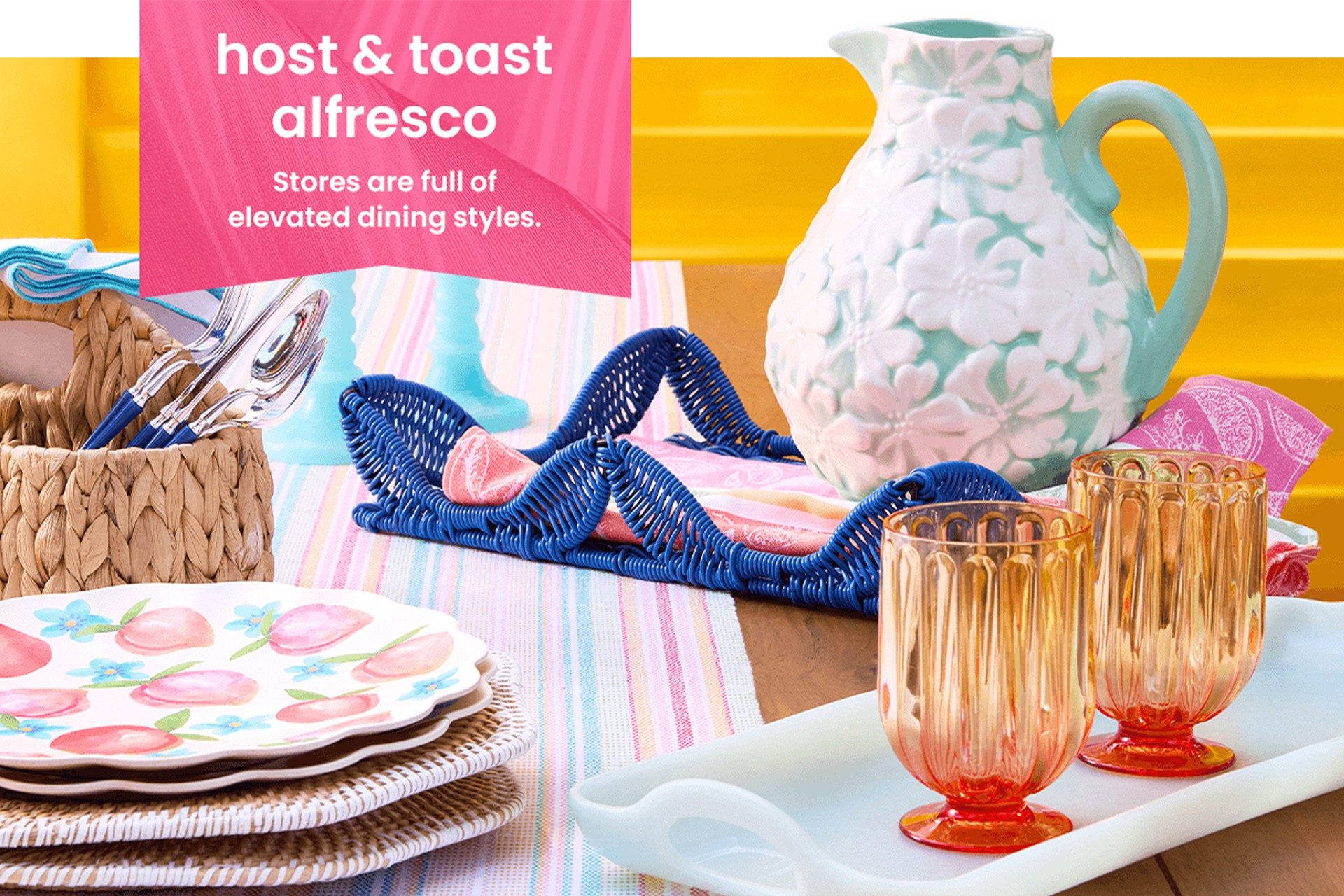
A basic advantage HomeGoods enjoys, at least with some customers, is the ability to immediately fill out what they already have, at times because they’re entertaining and don’t have everything they need. Others simply like to see what they might add to their homes as they update their home spaces seasonally. And, as it is often the nearest store with a considerable assortment of domestic merchandise, HomeGoods is convenient. The banner might even be insulated from the effects of housing market sales on domestic categories, because consumers can enhance existing homes at a reasonable cost.
Source: HomeGoods.com
More Sourcing
As TJX continues to expand its supplier base, HomeGoods is a point of focus, Herrman said. Although TJX continually looks for vendors and opportunities for off-price programs and opportunity buys, tariffs have added a particular twist to the process. Herrman emphasized that TJX’s broad global vendor base can help it shift buying when tariff pressures affect goods coming from a specific country. Although he said the company in general has significant insulation from tariffs, TJX acknowledged it is assuming a slightly negative financial impact in this fiscal year’s first half from China tariffs on merchandise the company committed to acquiring based on the duties in place at the time.
In an expert call with Morgan Stanley, Jonathan Savoy, former vice president of merchandising planning at Burlington and assistant vice president merchant planning at T.J. Maxx said, said, in commenting on what was described as outsized tariff resilience, the TJX advantages compared with its immediate competitors include larger scale, a highly experienced merchant team, a higher-income core consumer and a larger better/best product mix. As such, TJX enjoys greater buying power, economies of scale and price-taking ease, Savoy said. Morgan Stanley concurred as, in addition to TJX’s relative tariff insulation, it underscored recession favorability and structurally higher margin profile when compared against its history.
Overall, Herrman emphasized HomeGoods has performed favorably in comparison to the overall home retail sector. Even if it isn’t as housing-dependent as some of its competitors, the TJX home business will benefit when interest rates decline and residential building starts gain, he said.
Getting Better
TJX is also pushing HomeGoods’ margin improvement. Herrman said he sees an ability to close the gap between apparel-oriented banners and HomeGoods on margins.
“We can directionally keep moving, closing the gap,” he said. “Our expectations aren’t that it would ever necessarily get there because you have some categories that have an innately higher margin in a Marmaxx versus a home business. On the flip side, I think our home business, the way we track, is probably one of the most profitable home businesses in the country or the world, with the margins we’re at. If we didn’t own T.J. Maxx and Marshalls, we’d probably say, ‘Wow, look, how high this is.’”
Given developments, McMillanDoolittle’s Benedict said he regards HomeGoods’ outlook as positive.
“I do believe that off-price retailers like TJX and all of their formats are well-positioned to be successful at a time when consumers are focused on value,” Benedict said.
However, Benedict cautioned that tariffs still could pressure HomeGoods and TJX generally, depending on where they settle. Major supply chain shifts, rather than relatively minor shifts, could have short- and longer-term impacts on TJX, especially if overstocks and overruns dry up, he said. Of course, TJX also maintains more traditional vendor relationships to keep goods flowing and responds to ongoing changes to market trends as they occur. So, economic uncertainty could chill the TJX outlook on the sourcing and sales sides if a trade war drags on, the economy sours and consumers dramatically tighten down discretionary purchasing.
So, although things might look pretty good for TJX and HomeGoods specifically at the moment, Benedict points out, “long term, there is no retail concept that is immune from the impact of a trade war on the scale we are currently witnessing.” Some caution has to be taken when looking at HomeGoods’ prospects given the economic turmoil sparked by the shifting application of duties, he said. Yet, on a basic level, HomeGoods remains positioned for growth.
“I do believe that off-price retailers like TJX and all of their formats are well-positioned to be successful at a time when consumers are focused on value.”
– Scott Benedict, Affliate Partner, McMillanDoolittle
In the Long Run
Morningstar’s Rohr stated that HomeGoods should be able to at least return to a 12% margin as the outside influences that have hit domestic products and the housing market in general gradually normalize.
Herrman has prioritized HomeGoods since taking charge of TJX in 2016, Rohr observed. Going forward, HomeGoods should enjoy benefits from its growing procurement scale. However the strength of its competition can’t be discounted. Because, even if off-price consumers tend to prefer recognized brands, HomeGoods doesn’t enjoy as much additional differentiation from mass market, digital and other value-oriented retailers that T.J. Maxx and Marshalls enjoy with the aspirational brands they offer and their shoppers covet.
If observers point to vulnerability, such as HomeGoods’ cross-channel competition for home furnishings, HomeGoods’ growth is solid evidence a solid proportion of consumers still want to see, feel and compare household goods. Even if it doesn’t feature the kind of established national brands that T.J. Maxx and Marshalls offer, the TJX treasure hunt shopping formula has been working for HomeGoods as it has competed with mass merchants who have become more private-label oriented and have limited assortments in many key household product categories.
As a competitive vehicle, HomeGoods played a role in the downfall of Bed Bath & Beyond, where executives pre-bankruptcy admitted HomeGoods was a competitive factor that drove changes to the business. TJX has been sufficiently convinced of HomeGoods overall prospects and expansion potential in physical retailing that it ended the banner’s e-commerce operations.
TJX has seen fit to pair Homesense with HomeGoods in some retail centers to give consumers a broader range of choice for household goods. As TJX continues to explore where it can co-locate HomeGoods and Homesense stores, Herrman maintained that cannibalization has been minimal where they operate in close proximity, and TJX has seen sales growth from both banners in some such cases.

Source: HomeGoods.com
Market Standing
HomeGoods has grown to become a more attractive option for consumers, who have pumped up its sales threefold over the past decade. But has it emerged as a true destination store in the housewares and home decor category?
Benedict emphasizes the treasure hunt orientation of the store as central to its appeal. What HomeGoods offers, he said, doesn’t provide enough consistency to make it a true destination store across the full home space as Bed Bath & Beyond once was and might be again if the initiative by Beyond and Kirkland’s to revive the banner as a brick-and-mortar presence takes off.
Even if the Bed Bath & Beyond initiative gains traction, the store growth required will take time to impact the larger marketplace. At the same time, the treasure hunt positioning central to HomeGoods and the other TJX banners is one that helped drive the success of the warehouse club sector, as well as traditional and a new and growing crop of off-price operations such as Nordstrom Rack.
TJX is only one indication that the treasure hunt proposition has gained favor as an alternative to traditional physical retail and e-commerce among many consumers. Indeed, as the endless shelf online has become more overwhelming for consumers who might be looking for inspiration in their home purchasing, or even recreation, off-price retailers such as HomeGoods that constantly change their assortments could become even more attractive.
“They constantly have new stuff, and you want to see it,” Benedict said.
He added that it’s important to understand that TJX has developed a unique expertise in finding and stocking merchandise that truly appeals to consumers in its markets. When TJX combines an ability to source appealing merchandise with an expertise in picking the right store locations and delivering conspicuous value, the result, as the company has demonstrated, is effective growth. In addition, he noted, HomeGoods has benefited from the existence of competitors in the market.
Source: HomeGoods.com
The Ongoing
HomeGoods continues to impress. The banner posted comps up 4% to 2% in the first quarter at Marmaxx. Although tariffs and the TJX response to them occupied much of the conference call, Herrman said the HomeGoods gains in the challenging market environment, and those in the home business generally, testified to the strength that household products have been demonstrating.
Margins keep improving, Herrman said. HomeGoods, in combination with Homesense, offers consumers a differentiated global product mix. As a result, they continue to gain market share. Klinger observed that the nature of the HomeGoods product mix, with a high proportion of products that consumers could buy and later swap out, continually prompts consumer interest. That confirms to TJX management that shoppers are looking to HomeGoods and the company’s broader home presentation as a resource for expressing their domestic style at value prices. In that way, HomeGoods shares with the TJX apparel business a draw for consumers looking to make annual and seasonal style refreshes and renewal, even when the economy is dicey.